Women's health
Your Options for Uterine Fibroids Treatment, Explained
Hearing 'fibroids' doesn't mean surgery is next. Uterine fibroids treatment usually starts with medication we prescribe and monitor, not a surgical referral.

Share article:
What Uterine Fibroids Treatment Involves, Before Anyone Says Hysterectomy
Uterine fibroids treatment almost always starts with medication, a hormonal coil, tranexamic acid, or similar, not surgery. Around 1 in 3 people develop fibroids, most don't need treatment at all, and procedures like embolisation or a hysterectomy only come in when medication genuinely isn't enough.
One in three women will hear the word "fibroids" at some point in their lives, and almost all will have the same first reaction. Straight to surgery. Straight to a hysterectomy. Straight to a body that feels forever changed.
Although that reaction is understandable, uterine fibroids treatment usually starts somewhere far less severe. Treatment generally starts with medication we can prescribe and manage through our menstrual healthcare, long before anyone mentions surgery, if they ever need to.
What Are Fibroids, and How Common Are They?
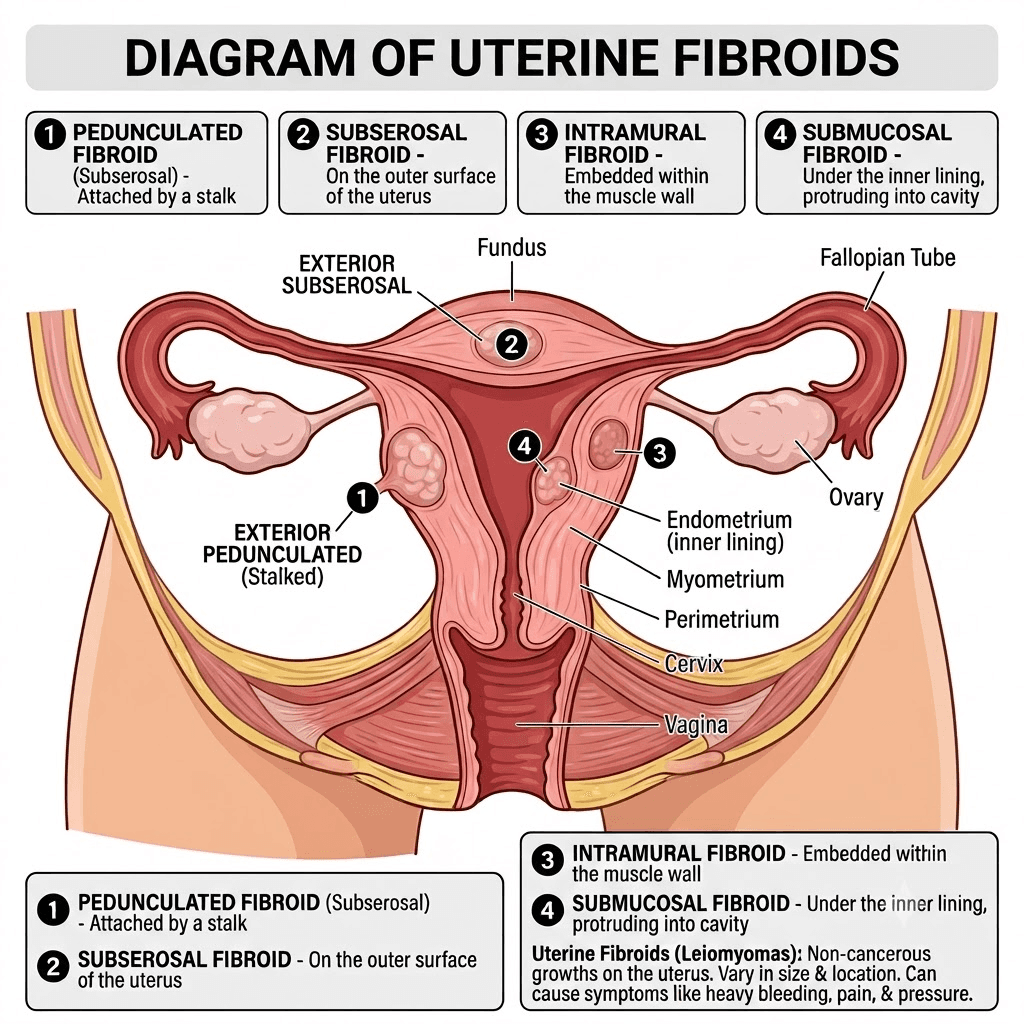
Fibroids are non-cancerous growths that develop in or around the womb. They're made of muscle and fibrous tissue. They vary in size, from barely noticeable to large enough to change the shape of the abdomen, and you can have one or several at once.
They're also common. Around 1 in 3 people who menstruate develop fibroids at some point. Many never find out, since fibroids don't always cause symptoms.
When they do, symptoms can include:
Heavy or prolonged periods
Painful periods
Bleeding between periods
Lower abdominal or back pain
A feeling of pressure or fullness in your lower abdomen
Needing to urinate more often or trouble fully emptying your bladder
Constipation or a change in bowel habits
Pain or discomfort during sex
Tiredness or breathlessness, if heavy bleeding has led to low iron levels
Fertility difficulties, though this is less common than the other symptoms
Not everyone has all of these symptoms, and how much they affect you often depends more on where a fibroid is than on its size.
If you haven't had fibroids confirmed yet, diagnosis usually starts with an examination and a pelvic ultrasound. We can do both here at the Women’s Health Clinic, so you won't have to wait for a separate referral to find out what's going on.
To take some of the pressure off the appointment, we’ll ask you to complete a health form before we meet. This gives us more time to discuss what’s going on with you.
Why Uterine Fibroids Treatment Targets Symptoms, Not the Fibroids
If your fibroids aren't causing you problems, they usually don't need treatment at all. Many shrink naturally after menopause, once oestrogen and progesterone levels decline.
When treatment is needed, the goal for most women is managing the symptoms. They want to reduce the heavy bleeding, pain, and pressure. It's not about getting rid of the fibroids completely.
Depending on the size and placement of the fibroids, treatment starts with medication, then moves on to certain procedures, and only after that is surgery considered. A uterine fibroids treatment that controls your bleeding and helps you enjoy a high quality of life is considered effective, even if the fibroid is still there.
The Medical Options We Can Start and Monitor
For smaller fibroids, under 3cm, that aren’t impacting the shape of your uterus, the first option is a hormonal coil. We fit and manage the Hormonal Coil/IUS here at the clinic. For many women, that's enough to bring heavy bleeding under control within a few months.
If a coil isn't right for you, tranexamic acid and anti-inflammatory painkillers are non-hormonal options, alongside hormonal choices like the combined pill. None of these shrink the fibroid. They target the bleeding and pain, which tends to make the most difference in your daily life.
A smaller group of medicines, mainly ulipristal acetate, can shrink the fibroid. These are used when the main problem is bulk, pressure, or a constant feeling of fullness. Size-reducing treatment only impacts the fibroid size, not the bleeding or pain.
It's also used as a fallback when surgery or uterine artery embolisation aren't suitable or haven't worked. Because it carries a small risk of liver injury, it comes with closer monitoring. A liver function check before you start, then again monthly for the first two courses.
There are other hormonal routes too. Cyclical progestogens, taken for part of your cycle rather than every day, can help regulate bleeding for women who don't get on with a coil or the pill. Which option makes sense depends on your symptoms, your plans around fertility, and what you've already tried.
What Exists Beyond Medication
For fibroids of 3cm or more, the same medical options still come first.
However, if medication isn’t enough, either because bleeding hasn't settled, the fibroid is impacting the shape of your uterus, or the size is impacting your daily life, there are two other options. 1) non-surgical procedures, and 2) surgery.
Uterine Artery Embolisation
This technique is sometimes called non-surgical fibroid removal, since it shrinks fibroids by blocking their blood supply rather than removing them. It's carried out by interventional radiology, not gynaecology, so it isn't something we do here at the clinic.
It generally means a shorter recovery than surgery, and it's often considered for women who want to avoid an operation but aren't planning future pregnancies, since it isn't recommended if protecting your fertility matters to you.
If it looks like the right fit for your case, we'll refer you to interventional radiology.
Surgery
Surgery is considered when medication and embolisation haven't worked, aren't suitable, or your case calls for a more severe approach. There are two options, and which one's right depends largely on what you want for the future.
Myomectomy removes the fibroids and leaves the womb in place. It's the option we'd discuss if a possible pregnancy matters to you or if you'd simply rather not lose your womb. Recovery is longer than embolisation, and new fibroids can develop afterwards, since removing existing ones doesn't change whatever's causing them to grow.
Hysterectomy removes the womb entirely. It's the only option that rules fibroids out for good, and it tends to be considered when fibroids are large, numerous, or symptoms are severe enough that a permanent solution outweighs keeping the womb, particularly for women who aren't planning any future pregnancies.
If a referral for a surgical opinion is the right next step, we'll make sure it comes with your full history already attached, so you're not starting from nothing.
Uterine Fibroids Treatment and Wanting to Conceive
Fibroids typically don't affect your chances of getting pregnant. Whether yours might depend more on where they sit, not just how big they are.
Fibroids on the outer surface of the womb rarely affect fertility, and removing them doesn't tend to change that either way.
Fibroids within the muscle wall are more of a grey area. Small ones usually make no difference, but larger ones, especially if they push into the space where a pregnancy would sit, can lower your chances and should be discussed.
The fibroids most likely to cause fertility problems are the ones that bulge into the womb's cavity. These are linked to lower pregnancy rates and higher miscarriage risks. Removing them, usually by myomectomy, tends to improve both.
Uterine artery embolisation isn't recommended if protecting your fertility matters to you. It reduces blood flow to the womb, not just to the fibroid, which carries a real risk to how your ovaries and womb function afterwards.
However, if your fibroids aren't causing symptoms and aren't sitting inside the cavity, we wouldn't usually recommend touching them just because you're trying to conceive. If you've had unexplained difficulty conceiving or a previous pregnancy loss, that's when we'd look more closely at whether a fibroid is playing a part.
More Than a Diagnosis
A fibroid diagnosis on its own doesn't tell you what to do next. Book a consultation with us and leave with an actual plan:
What your specific fibroids mean for your symptoms
How the fibroids might impact your fertility plans
Which option genuinely makes sense first
Book Your Fibroid Consultation
Common Questions About Uterine Fibroids Treatment
What's the Least Invasive Fibroid Treatment?
For most women with smaller fibroids, that's a hormonal coil, fitted in a single appointment and reversible if you change your mind. It won't shrink the fibroid, but it's often the most effective option for controlling heavy bleeding with the least disruption to daily life.
How Much Does a Hormonal Coil Fitting Cost With Us?
A Hormonal Coil/IUS fitting, including your consultation and the device, costs £423.39 with us. That's the full price, with nothing added on afterwards.
Can Fibroids Come Back After Treatment?
It depends on the treatment. Medication manages symptoms rather than removing fibroids, so symptoms can return if you stop. Procedures like myomectomy remove existing fibroids but don't stop new ones forming, since we don't fully understand the underlying cause.
Hysterectomy is the only option that clears fibroids out permanently.
You Always Have Options
Most women with fibroids never need surgery at all. The ones who do usually try other options first. Wherever you are in that process, we'll go through all of it with you, one step at a time.
Disclaimer: We share these insights to help educate and empower you on your health journey. However, this information is not a substitute for professional medical advice. Because your body is unique, we encourage you to book a consultation with us so we can create a personalised plan tailored perfectly to your needs.